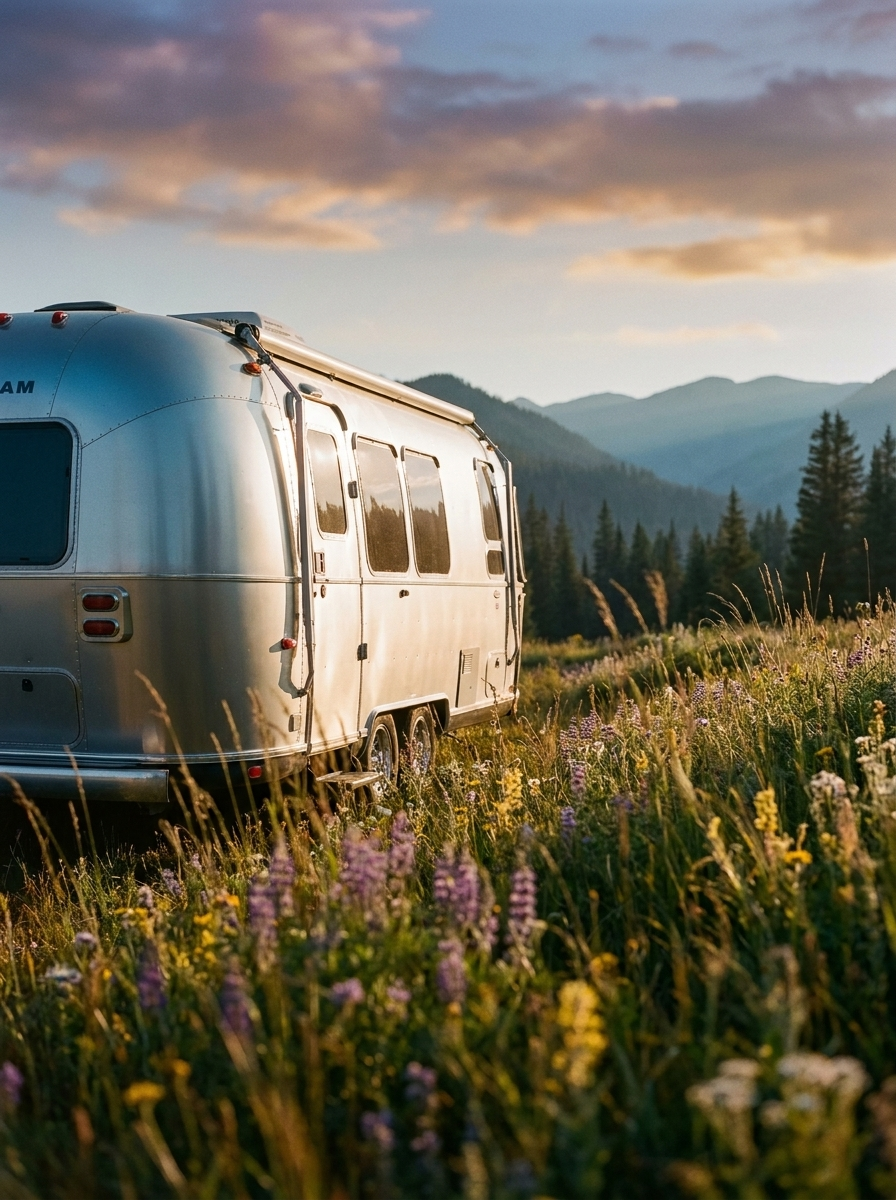
You’re staring at a booking page with three sites available: one says “full hookup,” one says “partial,” one just says “no hookups.” They’re all technically campsites. They are not the same trip.
Here’s the short version: full hookup means water, electric, and sewer are all connected at your site, so you can run everything without watching a single gauge. Partial hookup usually means electric and water, but no sewer, so you’ll dump waste at a station instead of at your site. Dry camping (also called boondocking on public land) means none of the three, you’re running on your RV’s own battery, propane, and water tank until you refill. The right choice depends less on which sounds nicer and more on your trip length, your rig, and how much system-management you actually want to deal with.
Jump To
Quick-Answer Box
|
Full Hookup |
Partial Hookup |
Dry Camping |
| What’s connected |
Water, electric, sewer |
Water and electric (usually) |
Nothing |
| Best for |
First-timers, longer stays, families |
Budget-conscious trips, shorter stays |
Experienced RVers, solitude, public land |
| Typical setup effort |
Lowest |
Moderate (plan a dump-station stop) |
Highest (battery/water/propane management) |
| Where you’ll find it |
Private RV parks, RV resorts |
State/national parks, some private parks |
BLM land, national forests, dispersed sites |
What Each Term Actually Means
- Full hookup: water, electric, and sewer connections all run directly to your site. You can shower, run the AC, and use the toilet normally without tracking tank levels.
- Partial hookup: almost always water and electric, but no sewer line at the site. You’ll need a dump station, either on your way out or partway through a longer stay.
- Dry camping / boondocking: no connections at all. Power comes from your RV’s battery bank (recharged by solar, a generator, or driving), water comes from your fresh tank, and waste goes into your holding tanks until you find a dump station.
One wrinkle worth knowing: some listings say “partial hookup” but only mean electric, with no water at all. Always check the specific utilities listed on a site, not just the category label.
What Each One Actually Costs
Costs vary by campground and region, but the general pattern holds pretty consistently:
- Full hookup sites at private RV parks commonly run somewhere in the $30 to $60 per night range, sometimes more at resort-style parks with pools, laundry, and other amenities.
- Partial hookup sites are usually cheaper, often somewhere in the $20 to $40 range, and are the more common setup at state and national park campgrounds.
- Dry camping on public land, like BLM land or national forest dispersed sites, is frequently free or close to it, though you’re trading cost for needing your own power and water systems.
50-amp electrical service (needed for larger rigs running more at once) sometimes costs a bit more per night than 30-amp service, so check which amperage your RV actually needs before assuming a site works.
How to Decide for This Specific Trip
Skip the “which is best” framing, none of the three is universally better. Instead, run through these four questions for the trip you’re actually planning:
- How long are you staying? A weekend trip rarely needs a sewer connection; a two-week stay usually does, unless you’re comfortable making a dump-station run partway through.
- How comfortable are you with tank and battery management? If you’ve never watched a black tank gauge or run a generator, a full hookup site removes that entire learning curve for your first few trips.
- What does your rig actually need? Larger rigs with bigger appliance loads (double AC units, residential fridges) lean toward full hookup and 50-amp service. Smaller rigs and vans can dry camp comfortably for longer.
- What are you actually there for? If the appeal is being somewhere quiet with no neighbors ten feet away, dry camping delivers that in a way a crowded RV resort never will, even if it takes more planning.
If two or more answers point toward “less experience, shorter margin for error,” pick full hookup. If they point toward “comfortable with systems, want solitude or lower cost,” dry camping or partial hookup fits better.
Managing a Partial Hookup Stay
Partial hookup is the one that trips people up most, mainly because it looks like full hookup at a glance but isn’t. A few things make it manageable:
- Keep your black tank valve closed until it’s most of the way full, then dump it all at once at the station. Leaving it open the whole stay lets liquid drain while solids build up, which causes clogs.
- Check whether the campground’s dump station has a line at typical checkout times; many RVers dump early in the morning or the night before to avoid it.
- If your stay runs long, a portable waste tank (sometimes called a “tote tank”) lets you haul waste to the dump station without breaking camp entirely.
What Dry Camping Actually Requires
Dry camping isn’t just “camping without hookups,” it’s running your RV as a self-contained system, which takes some real preparation:
- Power: most RVs run basic lights and propane appliances off battery without issue, but AC, microwaves, and other high-draw appliances need either a healthy battery bank with solar, or a generator.
- Water: you’re limited to what’s in your fresh tank, so conservative habits (shorter showers, turning off the tap while washing dishes) stretch a tank noticeably further than most first-timers expect.
- Waste: both gray and black tanks fill without a dump connection, so know your tank capacity and plan your trip length, or dump stop, around it.
- Public land rules: on much of the BLM land where free dry camping is common, a frequently cited limit is 14 consecutive days in one spot before you’re required to move, often around 25 miles, though exact rules vary by area, so confirm locally.
The Hybrid Strategy Nobody Mentions
Most guides present this as an either/or choice for the whole trip. It doesn’t have to be. A common pattern experienced RVers use: book a full hookup site for the first and last night of a trip (fill up, dump everything, recharge devices and batteries), then dry camp or use partial hookup sites in between. You get the convenience bookends without paying full-hookup prices for the entire stay, and it stretches your tanks further since you’re starting each dry-camping stretch completely empty and full.
Mistakes That Come From Picking Wrong
- Booking partial hookup for a two-week stay without a dump plan. It’s manageable, but only if you’ve actually mapped out when you’ll dump, not left it as an afterthought.
- Assuming “hookup” always means all three utilities. Some listings use “hookup” loosely; always check the specific utilities on the listing, not just the label.
- Dry camping for the first time on a remote, hard-to-reach site. A first dry-camping trip goes more smoothly somewhere with cell signal and a backup plan nearby, not three hours from the nearest town.
- Not matching amp service to the RV. A 50-amp rig plugged into a 30-amp-only site needs an adapter and reduced power draw, not a surprise at check-in.