

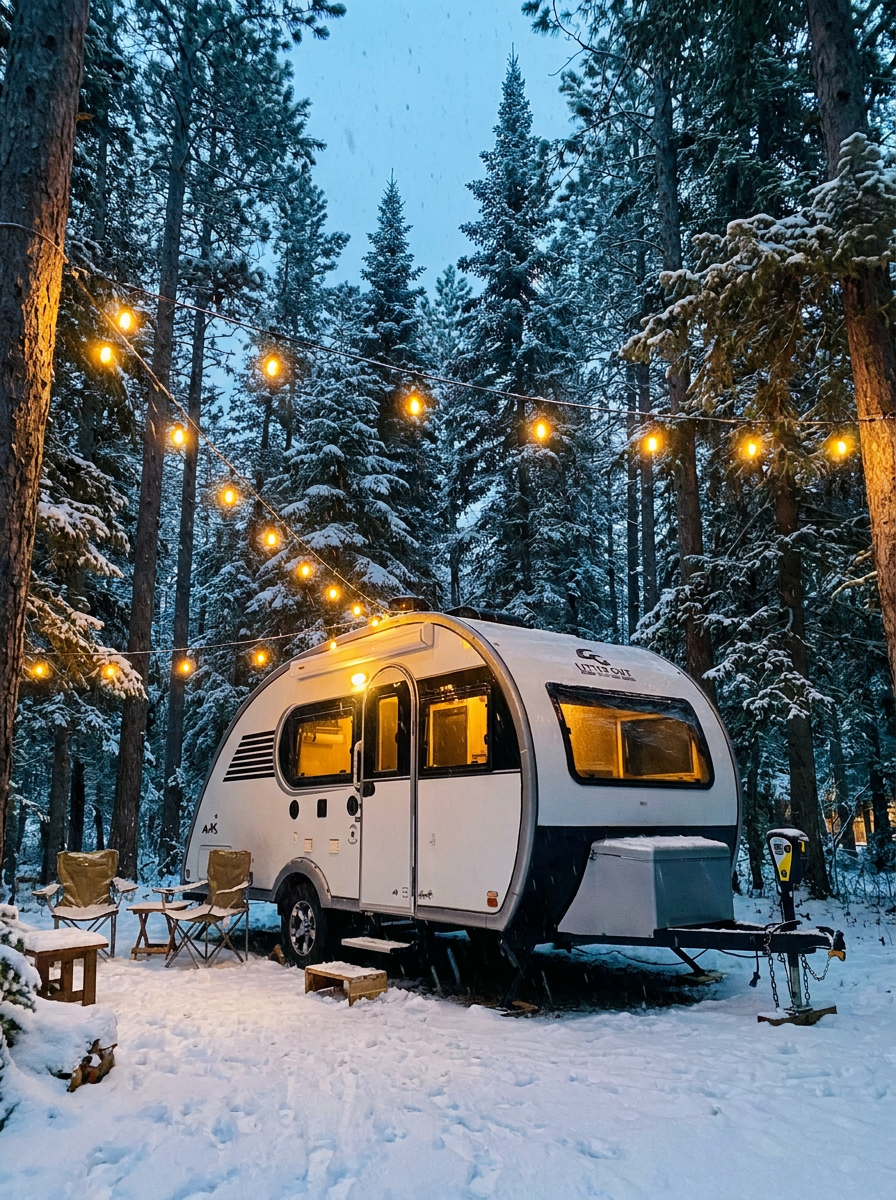
You wake up to no water pressure. Somewhere in the line between the spigot and your RV, it froze overnight. That’s the winter RV disaster that actually costs money and ends trips early, not the cold itself. Most winter camping guides lead with staying warm. This one leads with the thing that actually goes wrong most often: your plumbing.
Jump To
- Priority One: Protecting Your Water System
- Staying Warm: Heat and Insulation
- Power in the Cold: Batteries and Electrical
- Winter Driving Basics
- Before You Book: Check Campground Winter Status
- Winter Emergency Kit
- Mistakes People Make Winter Camping
- FAQ
Quick-Answer Box
| Risk | What Actually Protects You |
|---|---|
| Frozen water lines | Heated hose, or use your internal fresh tank instead |
| Frozen tanks/sewer hose | Only dump when near full, keep the sewer hose supported and insulated |
| Heat loss | RV skirting, vent pillows, insulated window covers |
| Reduced battery performance | Battery blankets/heating pads, surge protector at hookups |
| Icy roads | All-weather tires, slower driving, check chain restrictions |
| Closed amenities | Call ahead, many campgrounds shut off water/sewer seasonally |
Priority One: Protecting Your Water System
Frozen pipes and burst lines are the most common, and most expensive, winter RV problem, so this gets solved first, before anything else on this list.
- Use a heated hose, or skip the external hose entirely and rely on your RV’s internal fresh water tank, refilling manually as needed. Both approaches work; a heated hose is more convenient, the internal tank gives you more control if temperatures drop further than expected.
- Don’t leave your tank valves open. As covered in more depth in our hookup-types guide, leaving a valve open causes clogs even in warm weather. In freezing weather it adds a second problem: standing liquid in the sewer hose can freeze solid. Only dump when a tank is close to full.
- Support and insulate the sewer hose, or disconnect it between dumps in extreme cold, rather than leaving it lying on frozen ground the whole stay.
- Consider RV skirting if you’re camping in consistently freezing temperatures. Skirting wraps the base of the RV, trapping heat underneath and meaningfully protecting the pipes and tanks that run along the floor.
Staying Warm: Heat and Insulation
- Use more than one heat source. An RV’s built-in propane furnace often can’t keep up alone in serious cold, pairing it with an electric space heater (at a site with hookups) or a properly ventilated propane buddy heater covers the gap.
- Expect propane use to climb significantly. Winter propane consumption increases substantially compared to summer, so carrying extra fuel and confirming refill locations along your route avoids running out mid-trip.
- Insulate where heat actually escapes: vent pillows for roof vents, insulated covers or thermal curtains for windows, and rugs or interior flooring insulation all reduce heat loss in specific, known weak points.
- RV skirting does double duty here too, insulating the underside helps keep the whole interior warmer, not just the plumbing.
Power in the Cold: Batteries and Electrical
Cold weather reduces battery performance, meaningfully enough that a battery that seemed fine in summer can underperform in freezing temperatures. A battery blanket or heating pad helps offset this. At sites with electrical hookups, a surge protector is worth using regardless of season, but winter adds extra electrical draw from heaters and shorter daylight hours, so it’s more important than usual to make sure your electrical setup can actually handle the load.
Winter Driving Basics
- All-weather or winter tires meaningfully improve traction and control compared to standard tires in snow or ice.
- Check chain restrictions before you go. Some rental RV companies prohibit tire chains entirely due to damage risk, so confirm your specific rig’s policy rather than assuming.
- Drive slower, accelerate and brake more gradually, and avoid quick lane changes, all more important in a larger, heavier vehicle than a standard car.
- Watch for black ice, especially on bridges, which freeze before the surrounding road does.
- Have a real roadside assistance plan in place before a winter trip, not after you need it.
Before You Book: Check Campground Winter Status
Not every campground stays fully operational through winter. Some close entirely, others stay open but shut off water and sewer hookups seasonally while keeping heated bathhouses running. Calling ahead, or checking current amenity status directly rather than relying on an older listing, avoids arriving somewhere with services you assumed would be available.
Winter Emergency Kit
- A snow shovel, even if snow isn’t in the forecast for your specific dates, weather changes fast enough that this is worth having regardless.
- Wooden blocks under your stabilizer jacks if you’re parking on bare ground, to keep them from freezing to the surface.
- Extra propane, blankets, and a backup heat source in case your primary furnace fails overnight.
- A battery jump starter, since cold weather makes dead batteries more common.
Mistakes People Make Winter Camping
- Assuming the built-in furnace alone will keep up, then being caught without a backup heat source on the coldest night of the trip.
- Leaving tank valves open or the sewer hose exposed on frozen ground, both of which risk a frozen or clogged line.
- Not checking a campground’s actual winter amenity status, then arriving to find water and sewer shut off for the season.
- Underestimating propane needs, then running low mid-trip in an area without a nearby refill option.
- Skipping winter tires or ignoring chain restrictions, both of which meaningfully affect how your rig handles ice and snow.
Internal Link Block
- Search for winter-open, full-hookup listings: Campstr RV park search (placeholder, needs live URL)
- New to RV camping generally? Start with our RV Camping 101 guide (links up to the Pillar 3 pillar page)
- Own a park open through winter? List your property on Campstr (placeholder, needs live URL)
Related Reading
- Full Hookup vs. Partial Hookup vs. Dry Camping, Explained
- Common RV Camping Mistakes First-Timers Make
- RV Camping 101: Everything You Need to Know Before Your First Trip
FAQ
What’s the biggest risk in winter RV camping?
Frozen water lines and tanks, not the cold itself. Protecting your plumbing (heated hose or internal tank use, careful tank management, insulation or skirting) matters more than any single warmth-related upgrade.
Do I need RV skirting for winter camping?
It becomes genuinely useful once temperatures are consistently at or below freezing for extended stretches, since it protects both your plumbing and your interior warmth. For milder winter destinations or short cold snaps, it’s less essential.
Why does my propane run out faster in winter?
Furnaces work harder and run longer in cold temperatures, so propane consumption increases substantially compared to summer use, carrying extra fuel and knowing nearby refill locations avoids running short mid-trip.
Is it safe to drive an RV in snow or ice?
With the right preparation, all-weather or winter tires, slower and more gradual driving, awareness of black ice on bridges, and a real roadside assistance plan, many RVers do it regularly. Confirm your specific rig’s chain policy before assuming they’re allowed.
Do all campgrounds stay open in winter?
No. Some close entirely for the season, and others stay open but shut off water and sewer hookups seasonally while keeping other amenities like heated bathhouses running. Confirm current winter status directly with the campground rather than assuming from an older listing.
By the Campstr Discover Team. Last updated July 2026.
